.jpg)
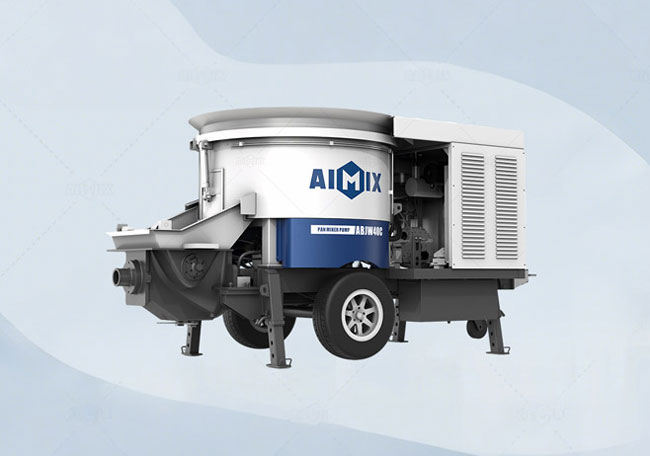
Rooftop slab construction in Jamaica presents a distinct set of engineering and logistical challenges. The pour point is elevated, often 5 to 15 metres above ground level. Access for ready-mix trucks is frequently limited by narrow roads, overhead wires, or soft ground. The structural integrity of the slab depends on consistent concrete quality and continuous placement. A mini concrete pump machine combination addresses these requirements. It produces concrete on site. It pumps the concrete vertically to the pour point. This article provides technical recommendations for equipment selection, operational procedures, and safety considerations. The information is intended for contractors and engineers engaged in structural concrete work in the Jamaican market.
Equipment Specifications for Structural Pouring
Pumping Pressure and Vertical Reach
The primary specification for rooftop slab work is pumping pressure. A mini pump must generate sufficient pressure to lift concrete 15 to 20 metres vertically. The required pressure is approximately 2 to 3 bar per 10 metres of vertical lift, plus an additional 5 to 10 bar to overcome friction losses in the hose. The minimum recommended pumping pressure is 40 bar. Units with pressures of 50 to 60 bar provide a safety margin for longer hose runs or stiffer concrete mixes. The formal recommendation is to select a unit with a maximum vertical reach specification of at least 25 metres. This specification accounts for both vertical lift and horizontal hose runs on the rooftop.

Mixing Capacity and Batch Cycle Time
The mixing capacity must be matched to the placement rate. A rooftop slab pour of 10 to 20 cubic metres requires a continuous supply of concrete. A mini concrete pump and mixer with a 1.0 to 1.5 cubic metre drum and a cycle time of 5 to 7 minutes can produce 9 to 18 cubic metres per hour. This output is sufficient for most residential and light commercial rooftop slabs. The formal recommendation is to select a unit with a twin-shaft mixer. Twin-shaft mixers achieve uniform consistency in shorter cycle times than single-shaft or planetary mixers. The shorter cycle time reduces the risk of cold joints.
Hose Diameter and Coupling System
The delivery hose diameter affects pumping efficiency. A 50-millimetre diameter hose is suitable for concrete with a maximum aggregate size of 16 millimetres. A 75-millimetre diameter hose allows aggregate sizes up to 25 millimetres but requires higher pumping pressure. For structural rooftop slabs, a 50-millimetre hose is recommended. The smaller diameter reduces the weight of the hose on the rooftop. It also reduces the volume of concrete in the hose, making cleanup faster. The coupling system should be a quick-connect type. Threaded couplings are slower to assemble and more prone to leakage under pressure.
Operational Procedures for Rooftop Slabs
Hose Routing and Support
The hose from the pump to the rooftop must be routed without sharp bends. Each 90-degree bend adds the equivalent of 5 to 10 metres of horizontal hose to the friction load. The formal recommendation is to use long radius bends or a sequence of 45-degree bends where changes in direction are unavoidable. The hose must be supported at intervals of 2 to 3 metres on the rooftop. Unsupported hose will kink. It will also damage the roofing membrane. The support can be timber battens or purpose-made hose rollers. The hose should be laid out before the pour begins. The crew on the rooftop should have a clear view of the hose end and the placement area.
Mix Design for Pumped Concrete
The concrete mix for rooftop slabs must be designed for pumpability. The water-cement ratio should be between 0.45 and 0.55. A plasticiser should be added to achieve a slump of 100 to 150 millimetres without adding excess water. The aggregate should be well-graded and free of elongated or flaky particles. The formal recommendation is to conduct a slump test at the start of the pour and every 10 cubic metres thereafter. A sudden drop in slump indicates a blockage in the hose. The concrete mixer pump for sale should be stopped immediately. The blockage must be cleared before resuming the pour.
Safety and Quality Assurance
Stabilisation and Outrigger Deployment
The mini pump mixer must be stabilised before pumping. The outriggers should be extended fully. The machine should be level. The formal recommendation is to use steel pads under the outriggers on soft ground. The pads distribute the load and prevent sinking. The machine should be positioned at a safe distance from the building. The hose should not create a tripping hazard on the ground. The operator should have a clear line of sight to the rooftop or communicate via two-way radio with the placement crew.
Contingency Planning for Blockages
Hose blockages are the most common operational problem. The crew should be trained in blockage clearing procedures. The first step is to reverse the pump for a few seconds. This action draws the blockage back toward the pump. If reversal does not clear the blockage, the pump should be stopped. The hose should be disconnected at the nearest coupling. The blockage should be removed manually. The formal recommendation is to keep a spare length of hose on site. If a blockage cannot be cleared within 15 minutes, the hose section should be replaced. The pour can then continue with minimal delay. The blocked section can be cleaned after the pour is complete.
The technical conclusion is that a mini concrete pump and mixer combination is a viable solution for rooftop slab and structural pouring in Jamaica. The equipment must be specified with adequate pumping pressure, mixing capacity, and hose diameter. The operational procedures must address hose routing, mix design, and blockage clearing. The safety measures must include proper stabilisation and communication. Contractors who follow these recommendations will achieve consistent concrete quality and reliable placement. The investment in a mini pump mixer is justified by the reduction in labour, waste, and schedule risk.


