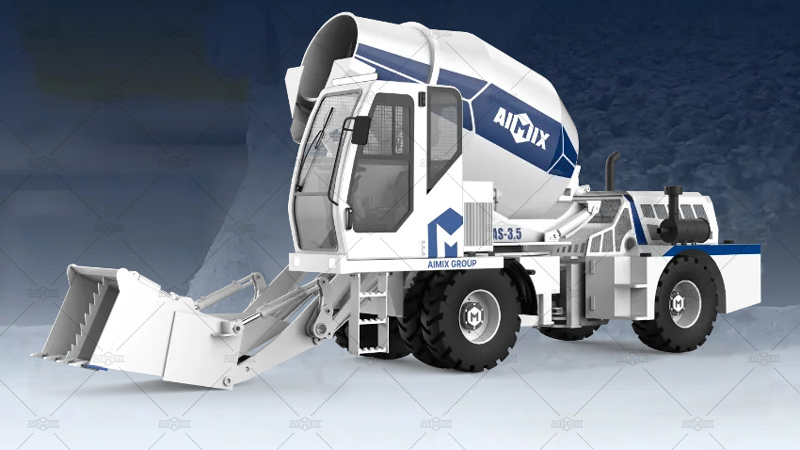
Nigerian construction has a rhythm. It is fast when it flows. It stalls when it waits. The biggest wait is often for concrete. A ready-mix truck stuck in Lagos traffic. A supplier who cannot deliver on time. A driver who refuses to enter a muddy site. These delays cost money. They also cost reputation. The self loading concrete mixer with an integrated pump solves this problem. It produces concrete on site. It pumps it to the placement point. It eliminates the dependency on ready-mix suppliers. This article describes Nigerian projects where this machine has demonstrated high productivity. The tone is matter of fact. The style is conversational. The information is practical.
Residential Housing Estates: Pouring Slabs and Foundations
The Challenge of Multiple Small Pours
A housing estate is built in phases. Phase one may have 50 units. Each unit requires a foundation slab. Each slab is 15 to 20 cubic metres. A ready-mix supplier will deliver to the estate. The trucks will queue. The drivers will wait. The concrete may set before it is placed. The self-loading mixer with pump works differently. The machine is positioned at the estate. Aggregates and cement are stockpiled nearby. The operator produces concrete as needed. The pump delivers it to the slab. The pour is continuous. No waiting. No queue. The formal observation is that the machine's productivity is highest on projects with multiple, repetitive pours. The operator develops a rhythm. The cycle time becomes consistent. The output per hour increases.

Reducing Labour and Waste
A traditional pour uses wheelbarrows. Labourers push concrete from the truck to the slab. They spill. They tire. They slow. The self-loading concrete mixer with pump in Nigeria eliminates the wheelbarrow. The pump hose reaches the far corners of the slab. The labour requirement is reduced by half. The waste from spillage is eliminated. The formal argument is that the labour saving alone justifies the machine's cost on a large estate. A crew of eight labourers may be reduced to four. The saving over a 50-unit estate is significant. The machine pays for itself.
Commercial and Retail Developments: Foundations and Columns
Access in Tight Urban Sites
Commercial sites in Lagos, Abuja, and Port Harcourt are often tight. The site is surrounded by roads, existing buildings, or both. A ready-mix truck has limited manoeuvrability. The driver may refuse to enter. The self-loading mixer is compact. It fits through gates. It manoeuvres in confined spaces. The pump hose reaches columns and foundation trenches. The formal observation is that the machine enables work on sites that would otherwise be inaccessible. Contractors who own one can bid on projects that competitors must decline. This exclusivity commands higher prices.
Continuous Pour for Columns
Commercial buildings have multiple columns. Each column requires a pour of 1 to 3 cubic metres. Ready-mix suppliers dislike small pours. The delivery cost is high relative to the volume. The supplier may impose a minimum order charge. The self-loading mixer produces exactly the volume required. No premium. No waste. The operator moves from column to column. The pump hose follows. The pours are completed in sequence. The formal argument is that the machine is particularly efficient for projects with many small, distributed pours. The combination of on-site batching and pumping eliminates the inefficiencies of the ready-mix model.

Infrastructure Projects: Drainage and Retaining Walls
Remote Site Logistics
Infrastructure projects are often remote. A road widening in Ogun State. A drainage channel in Delta. A retaining wall in Kaduna. The distance to the nearest ready-mix plant may be 50 kilometres or more. The transport cost is high. The concrete quality may suffer during the long journey. The self loading concrete mixer for sale in Nigeria is transported to the site on a low-bed trailer. Aggregates and cement are delivered by truck. The machine produces concrete on site. The pump places it along the channel or wall. The formal observation is that the machine's on-site production eliminates the transport cost and quality degradation associated with long-distance ready-mix delivery.
Adapting to Site Conditions
Infrastructure sites have uneven ground. The self-loading mixer is designed for rough terrain. The tyres are large. The ground clearance is high. The machine can be positioned near the pour point. The pump hose covers the remaining distance. The formal description is that the machine's mobility reduces the need for manual handling. Concrete that would require a line of labourers with wheelbarrows is pumped directly into formwork. The productivity gain is substantial. A pour that would take a full day with manual methods takes two hours with the pump.
The matter-of-fact conclusion is that the self-loading concrete mixer with pump is a high-productivity tool for Nigerian projects. It performs well on housing estates, commercial developments, and infrastructure projects. Its advantages are on-site batching, pumping capability, and mobility. The machine eliminates dependency on ready-mix suppliers. It reduces labour requirements. It minimises waste. Contractors who invest in this equipment report faster project completion and improved margins. The evidence supports their experience.


