Kenya's agricultural supply chain depends not only on crop production but also on the infrastructure that handles, stores, and processes agricultural output after harvest. Grain storage facilities, silos, warehouses, milling plants, feed-processing centers, and other agro-processing projects require durable concrete structures capable of supporting heavy equipment, repeated vehicle movement, and large volumes of stored materials. From foundation construction to floor slabs and equipment bases, concrete work forms a substantial part of the overall project.
However, the concrete requirements of agricultural facilities are not identical to those of ordinary residential construction. Project sites may be located near farming regions, away from major ready-mix suppliers. Construction schedules can also involve several separate structures built over different phases. Selecting suitable concrete solutions in Kenya therefore requires contractors to consider concrete production, transportation, placement, and site mobility as one connected workflow rather than as isolated activities.
Concrete Requirements for Grain Storage and Agro-Processing Facilities
Strong Foundations Support Heavy Storage Structures
Grain storage structures can transfer considerable loads to their foundations. Silos, storage bins, conveyors, elevators, and processing machinery require stable supporting structures designed according to the equipment configuration and expected operating conditions.
The foundation work may include isolated footings, strip foundations, raft foundations, equipment bases, and reinforced slabs. Concrete must be supplied consistently throughout the construction sequence, particularly where larger structural sections require continuous placement.
Equipment Foundations Require Accurate Concrete Placement
Agro-processing equipment often includes milling machines, conveyors, grain elevators, dryers, and other fixed installations. These machines may require accurately positioned foundations and embedded components.
Concrete placement must therefore be coordinated with reinforcement, anchor bolts, formwork, and equipment installation requirements. Dimensional accuracy can be as important as concrete volume.
Floor Slabs Must Handle Repeated Agricultural Traffic
Warehouses and processing facilities commonly require extensive concrete floors. Forklifts, loaders, trucks, pallet-moving equipment, and stored agricultural products can create continuous loading across the slab surface.
A well-organized concrete supply system helps contractors maintain the required construction schedule during large floor pours. Interruptions can complicate finishing operations and affect the continuity of the work.
Concrete Production Solutions for Agricultural Construction Sites
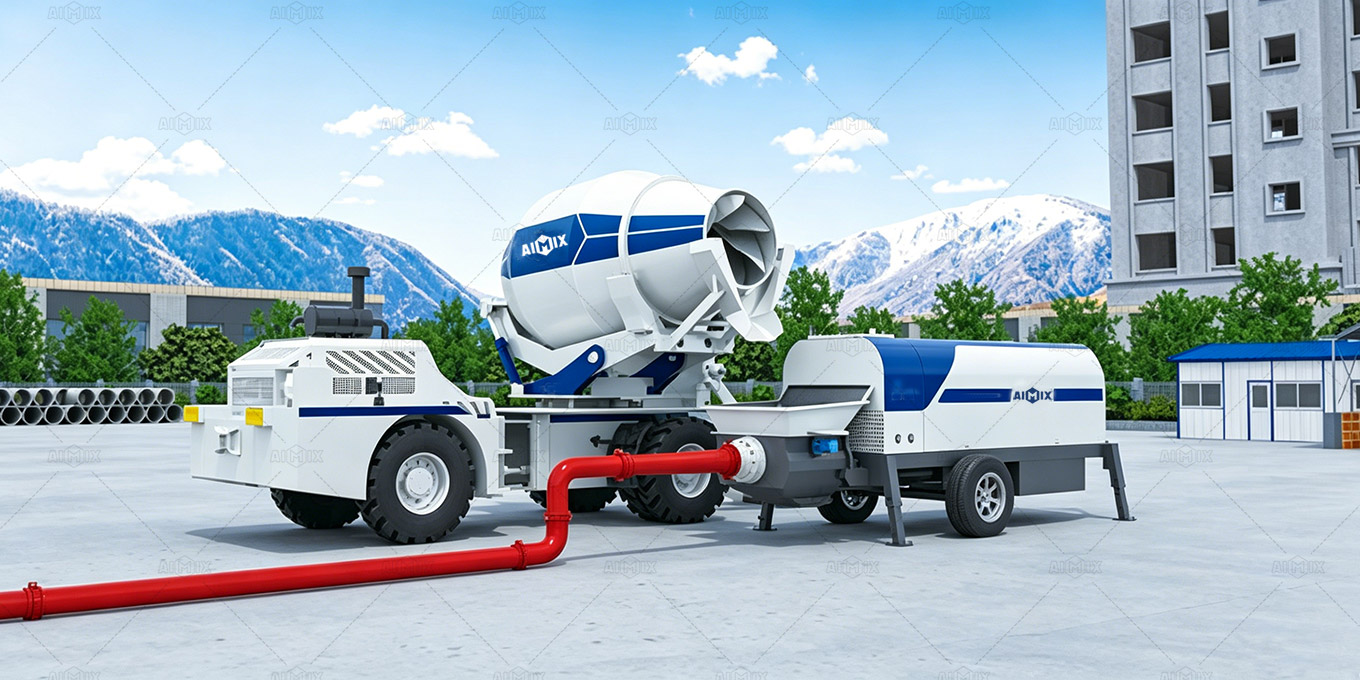
Self Concrete Mixer Solution for Flexible On-Site Production
A self concrete mixer solution in Kenya can be particularly useful for agricultural projects located outside major urban areas. Instead of depending entirely on ready-mix deliveries, contractors can produce concrete closer to the construction site.
A self loading mixer in Kenyacombines material loading, mixing, and transportation functions in one machine. Aggregates can be loaded directly into the mixing drum, concrete can be produced according to the required batch, and the machine can then move to the placement area.
This arrangement can support projects where different structures are distributed across a relatively large site. For example, foundations for a storage building may be located some distance from processing equipment bases or auxiliary structures.
Batching Plants for Larger Concrete Requirements
Large grain storage and agro-processing developments may require greater volumes of concrete over an extended construction period. In these circumstances, a concrete batching plant can establish a centralized production system.
Aggregates, cement, water, and other materials can be measured and mixed according to the selected concrete design. The batching plant can then support repeated pours for foundations, slabs, walls, drainage structures, and other project components.
Consistent Production Supports Multi-Phase Construction
Agro-processing facilities are often constructed in stages. A project may begin with storage structures and subsequently add processing buildings, warehouses, equipment foundations, or internal infrastructure.
A suitable production system can support these changing requirements without requiring contractors to establish an entirely new concrete supply arrangement for every construction phase.
Concrete Placement Challenges on Agricultural Projects
Distance Between Concrete Production and Placement Areas
Agricultural facilities can occupy large plots of land. The concrete production area may not always be located beside the final placement point.
Transporting fresh concrete over longer distances inside the construction site requires careful planning. Road conditions, equipment movement, and the sequence of construction activities can all affect delivery efficiency.
For some projects, mobile mixing equipment can transport concrete directly. For more difficult placement locations, pumping may provide a practical alternative.
Concrete Pump Solutions for Difficult-to-Reach Areas
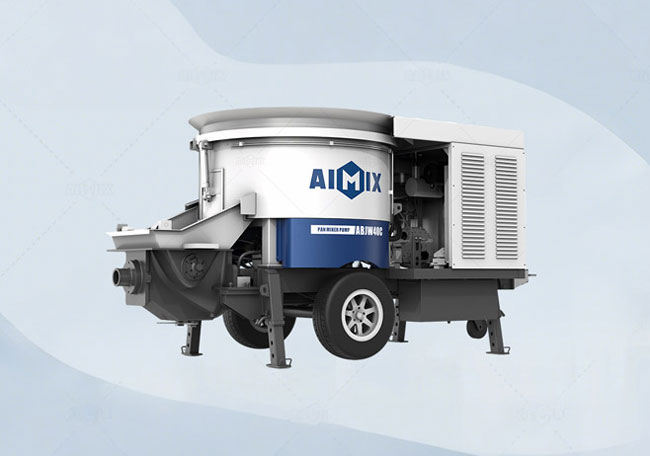
A concrete pump solution in Kenya can help deliver concrete to locations where direct discharge is impractical. Pipelines can transfer concrete across a construction site or around physical obstacles.
This can be useful for elevated structural elements, enclosed foundation areas, large slabs, and sections surrounded by reinforcement or other construction activities.
Reducing Manual Concrete Handling
Without appropriate placement equipment, workers may need to move concrete manually over short distances. This can slow the construction process and create inconsistencies in placement.
A properly configured pumping system can establish a more direct route between concrete supply and the placement point, particularly when continuous concrete delivery is required.
Matching Concrete Solutions to Different Agro-Processing Projects
Small Grain Warehouses and Rural Storage Facilities
Smaller storage projects may require flexible equipment rather than a large permanent production installation. A self-loading mixer can provide on-site production while reducing dependence on frequent ready-mix deliveries.
This type of arrangement may be particularly suitable for rural projects where concrete demand is moderate and construction activities move between several locations.
Large Silos and Processing Plants
Large projects with multiple structures can generate substantial concrete requirements. Foundations, equipment bases, retaining structures, floors, and auxiliary buildings may all require coordinated concrete production.
A batching plant combined with appropriate transportation and placement equipment can support a more continuous supply process. Where placement distances are significant, pumping equipment may complement the production system.
Integrated Planning Improves Construction Efficiency
The most suitable concrete solutions in Kenya depend on more than the total volume of concrete. Contractors should also consider project location, site access, distance from commercial ready-mix suppliers, daily production requirements, placement conditions, and the expected duration of construction.
A self concrete mixer solution in Kenya may provide mobility for dispersed or rural projects. A batching plant may be more appropriate for sustained high-volume production. Meanwhile, a concrete pump for sale in Kenya can address placement challenges where concrete must travel beyond the reach of direct discharge.
Building grain storage and agro-processing infrastructure requires a practical connection between concrete production and the structures being constructed. Durable foundations support heavy storage systems. Reinforced floors accommodate agricultural traffic. Equipment bases provide stability for processing machinery. Each element depends on a reliable concrete supply and placement process.
By matching mixing, batching, transportation, and pumping equipment to actual site conditions, contractors can develop a more efficient construction workflow. The objective is not simply to produce more concrete. It is to deliver the right concrete, in the required quantity, to the correct location at the appropriate stage of construction—supporting the long-term development of Kenya's agricultural infrastructure.


