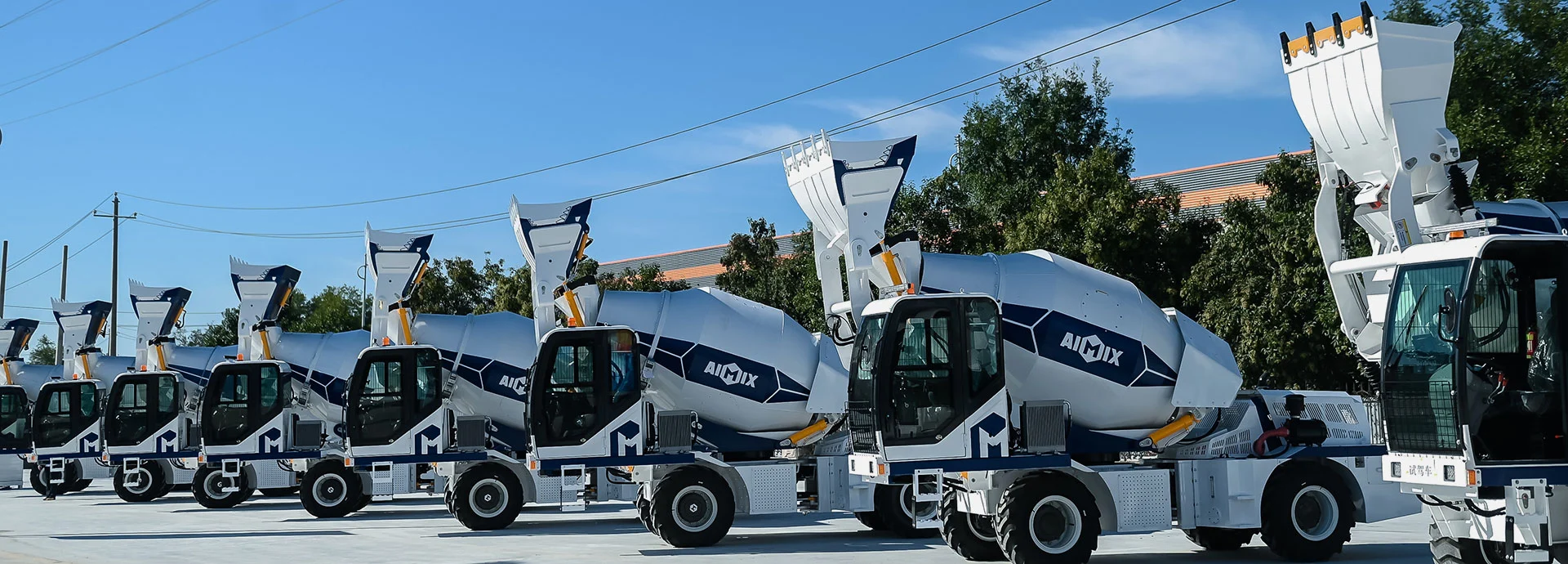
Choosing between the AS-MK24 and AS-5.5 self-loading concrete mixers requires more than comparing their rated production capacities. For contractors in Tanzania, the investment decision should reflect daily concrete demand, project duration, labor availability, operating conditions, and the amount of concrete that must be produced at different locations. Both concrete self loading mixer models combine aggregate loading, weighing, mixing, and discharge in one machine, reducing dependence on separate batching and mixing equipment. However, their configurations and production characteristics serve different operational priorities. The AS-MK24 is an upgraded model based on the AS-3.5 platform, designed to increase output through a larger loading bucket and improved discharge arrangement. The AS-5.5, meanwhile, offers a rated output of approximately 22 m³/h and is suited to contractors requiring substantial on-site concrete production. The better investment depends on whether a project benefits more from higher production efficiency per operating hour or a larger-capacity machine for sustained concrete supply. Comparing their productivity, application range, and operating costs helps Tanzanian buyers identify the model with stronger long-term returns.
Understanding the Main Differences Between AS-MK24 and AS-5.5
AS-MK24: Higher Output Through an Upgraded Loading and Discharge System
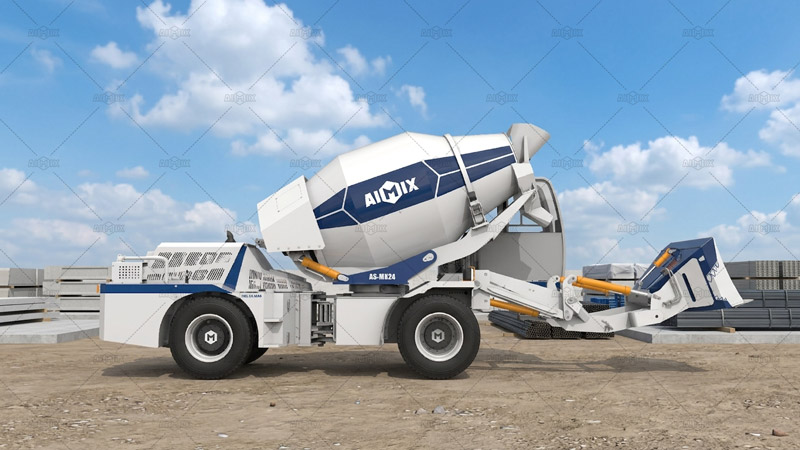
The AS-MK24 is an upgraded self-loading mixer based on the AS-3.5 model, with a rated production capacity of approximately 24 m³/h. Its 0.9 m³ loading bucket and drum-assisted push discharge system are designed to improve material handling and shorten the production cycle. The upgraded configuration increases the working frequency from approximately four to six batches per hour, representing a 50% increase in batch frequency. It also features a 6.0 m³ geometric drum volume and approximately 4.0 m³ effective mixing capacity. With automatic weighing, four-wheel drive, and a 91 kW Yuchai turbo engine, the machine combines higher output with mobile operation on construction sites.
AS-5.5: A Higher-Capacity Machine for Sustained Concrete Production
The AS-5.5 self-loading concrete mixer has a rated production capacity of approximately 22 m³/h. Its larger model classification makes it an option for contractors who need substantial concrete production from a single machine. Like other self-loading mixers, it integrates aggregate loading, weighing, mixing, transportation, and discharge. This arrangement reduces the need for separate loaders and stationary mixing equipment in suitable applications. Its production performance depends on loading conditions, mix proportions, operator efficiency, and the distance between material storage and concrete placement areas.
Comparing Production Capacity and Daily Productivity
Rated Output and Working Efficiency
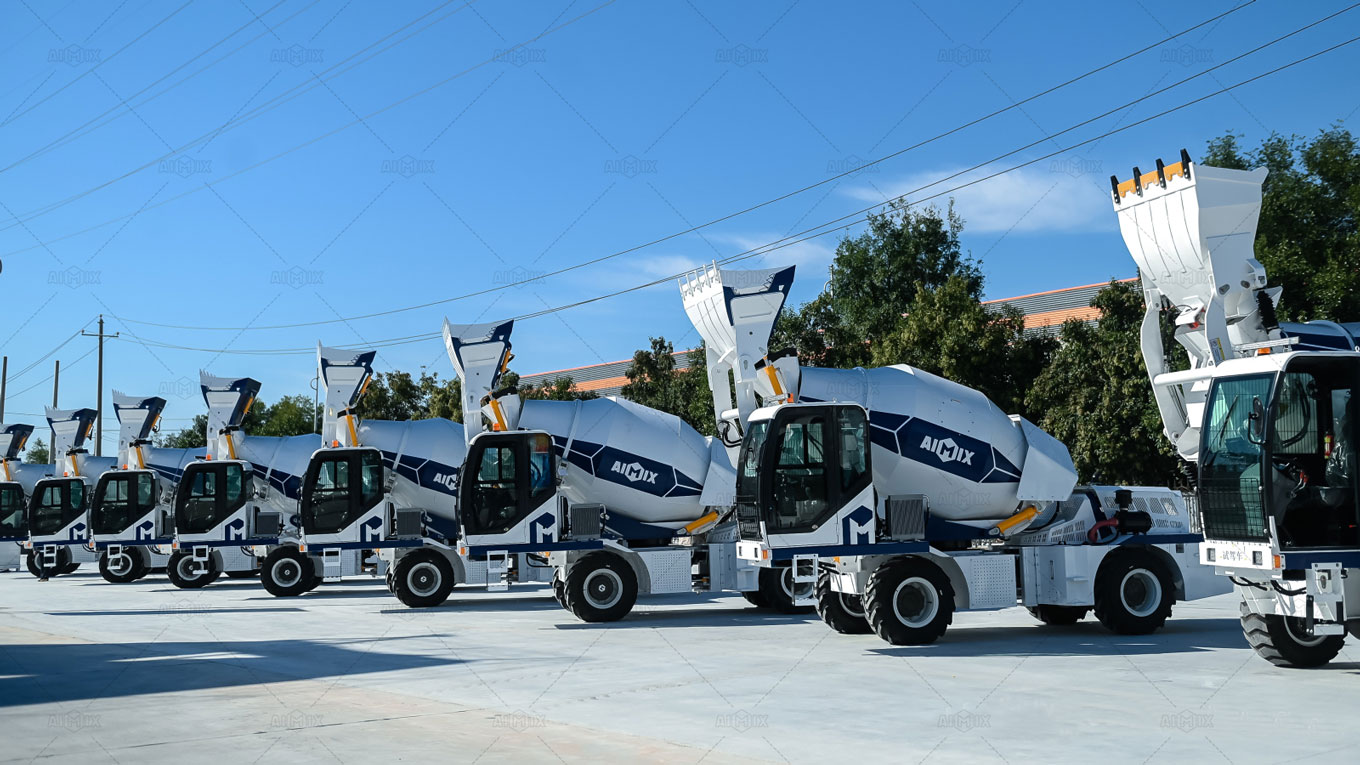
Although the two models have relatively close rated capacities, their production configurations differ. The AS-MK24 is rated at approximately 24 m³/h, compared with approximately 22 m³/h for the AS-5.5. The difference is not enormous on paper, but production-cycle efficiency can influence daily output when the equipment operates for extended periods. | Comparison item | AS-MK24 | AS-5.5 | |---|---|---| | Rated output | 24 m³/h | 22 m³/h | | Model platform | Upgraded AS-3.5 | AS-5.5 series | | Loading bucket | 0.9 m³ | Confirm configuration | | Main production advantage | Faster batch frequency | Higher-capacity machine configuration | | Suitable operation | Frequent concrete production cycles | Sustained on-site concrete supply | Actual output will vary with aggregate loading, mixing time, discharge, material replenishment, and site organization. Contractors should therefore compare achievable daily production rather than treating rated capacity as guaranteed output.
What Does the Capacity Difference Mean for Project Scheduling?
For a contractor producing concrete over an eight-hour working period, the theoretical output would be approximately 192 m³ for the AS-MK24 and 176 m³ for the AS-5.5. These figures are calculated from rated capacity and do not represent guaranteed site production. The practical advantage depends on how consistently each machine can complete its loading, mixing, and discharge cycles. A well-organized site with prepared aggregate stockpiles and short discharge distances can make better use of either machine.
Which Model Suits Different Construction Projects in Tanzania?
AS-MK24 for Contractors Handling Multiple Small and Medium-Sized Jobs
The AS-MK24 can suit contractors working on residential buildings, commercial developments, road repairs, drainage structures, and other projects requiring flexible on-site concrete production. Its upgraded loading and discharge arrangement is particularly relevant when frequent batching cycles are needed. For companies providing concrete production services across different locations, a versatile **self loading mixer in Tanzania** can reduce reliance on fixed mixing facilities. The AS-MK24 is worth considering when contractors want to increase the output of a relatively compact machine configuration.
AS-5.5 for Projects with Sustained Concrete Demand
The AS-5.5 can be considered for larger construction operations where concrete is required continuously throughout the working day. Examples include extensive residential developments, commercial building projects, industrial foundations, and infrastructure construction. Its rated 22 m³/h output provides substantial production capacity for contractors coordinating several concrete placement activities. Buyers should assess the actual pouring schedule and transportation distance to determine whether this model offers a practical advantage over the AS-MK24.
Evaluating Operating Costs and Labor Efficiency
Consider Fuel, Labor, and Material Handling
The operating cost of a self-loading mixer includes fuel consumption, routine maintenance, tires, hydraulic components, labor, and consumable parts. Aggregate handling also affects efficiency. Poorly arranged stockpiles or long internal travel distances can increase fuel use and extend production cycles. The AS-MK24's upgraded loading arrangement may help reduce cycle time under suitable operating conditions. However, contractors should compare actual fuel consumption and maintenance requirements using manufacturer specifications and site-specific working conditions rather than assuming that higher output automatically means lower operating costs.
Reduce Dependence on Separate Equipment
Both models integrate several concrete production operations into one machine. This can reduce the need for a separate loader, stationary mixer, and additional material-handling arrangements, depending on the project setup. For contractors comparing a **concrete mixer machine for sale in Tanzania**, the total equipment arrangement matters as much as the individual machine price. Fewer separate machines may simplify site coordination, but the contractor must still account for aggregate supply, cement storage, water, and concrete placement equipment.
Comparing Purchase Price and Long-Term ROI
Look Beyond the Initial Concrete Mixer Price
The **concrete mixer price in Tanzania** depends on the selected model, configuration, shipping arrangements, import charges, and optional equipment. Contractors should request quotations for both models with clearly specified technical configurations and delivery terms. A lower purchase price does not necessarily produce a better return. Buyers should compare the initial investment against expected working hours, daily output, labor requirements, maintenance expenditure, and the number of years the machine is expected to operate.
Estimate ROI Based on Actual Project Utilization
A practical ROI assessment should consider how much additional concrete the machine can produce and how that production contributes to project revenue or reduced outsourcing costs. For example, contractors with frequent, time-sensitive concrete pours may benefit from the AS-MK24's higher rated output and upgraded batching cycle. Companies with a different operational profile may find the AS-5.5 more suitable based on its configuration, purchase quotation, and maintenance arrangements. The best investment is the machine that remains productive across the contractor's actual project schedule, rather than one selected solely for its maximum rated capacity.
How Tanzanian Contractors Can Choose the Right Model
Match the Machine to Concrete Demand and Site Conditions
Before purchasing, contractors should estimate average and peak daily concrete requirements, identify the types of construction projects they undertake, and assess site access, terrain, and material supply arrangements. The AS-MK24 is a strong candidate when faster batching cycles and improved production efficiency are priorities. The AS-5.5 deserves consideration when its machine configuration and quoted price better match the contractor's sustained production requirements.
Request a Detailed Quotation and Technical Comparison
When evaluating an **AS-3.5 self loading mini concrete mixer for sale in Tanzania**, buyers can also ask the manufacturer about the upgraded AS-MK24 configuration to understand the differences in loading, mixing, discharge, and output. A complete quotation should specify rated capacity, engine configuration, weighing accuracy, hydraulic components, warranty, spare parts, shipping costs, and delivery arrangements. Comparing these details makes the investment decision more transparent. Ultimately, the AS-MK24 offers an attractive productivity advantage with its approximately 24 m³/h rated output, while the AS-5.5 provides an alternative with approximately 22 m³/h capacity. For Tanzanian contractors, the better ROI comes from matching the machine's production characteristics and total ownership costs to the concrete demand of their projects.


